
Remember Helen from Drake and Josh? If you’ve seen the show, you know her catchphrase. It’s unforgettable. “That is not my job.”
Hayburn’s Case is an expression of the same sentiment. Congress passed a law delegating certain duties to the Judicial Branch and the Justices said, “Hell no. That is not my job!”
This is a constitutional law case coming out of Pennsylvania.
Petitioner: United States Attorney General Edmund Randolph, who showed up to the Supreme Court without a client.
Respondent(s): Three judges! — Supreme Court Justices John Blair and James Wilson, and Pennsylvania District Court Judge Richard Peters.
This case went to the Jay Court during the Washington Presidency. The Court ultimately denied Randolph’s motion.
See the Court’s opinion here.
It’s like this.
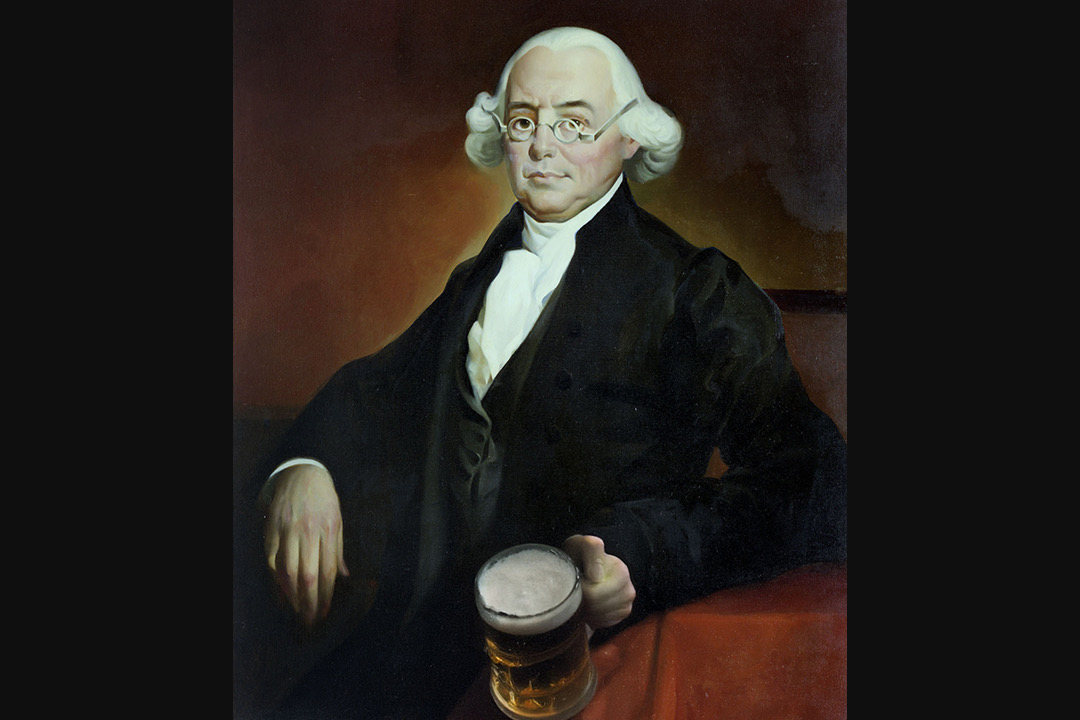
In 1792, Congress passed the Invalid Pensions Act (the “IPA”), a law intended to provide financial aid to wounded veterans of the Revolutionary War.1 (If you thought this post was going to describe the Justices sampling beer and wincing like they’re Sharks on Shark Tank, I apologize.)

So under the IPA, before the government would dole out any dough to a vet, somebody had to verify the vet was actually wounded in the war. The IPA gave that responsibility to the federal courts.2
If a veteran qualified for assistance, the applicable federal court was supposed to crunch the numbers and suggest the amount of pension, or regular payment, the veteran should receive.3 The court would then send their recommendation to the Secretary of War, who would confirm the person was actually a veteran, and make the ultimate decision as to whether the veteran would be paid.4
When this law came down, the Supreme Court Justices were riding circuit, so the Justice League was split up.5 Jay and Cushing were in New York, Wilson and Blair were in Pennsylvania, and Iredell was in North Carolina.6 (Justice Johnson was MIA.)
Remarkably, even though the Justices were not together, they each had a hand in authoring letters from the bench about the IPA — one letter from New York, one from Pennsylvania, and one from North Carolina.7 They sent these letters to President Washington.8
Why?
Because the Justices had dire concerns about the law.9 In their view, the IPA violated the Constitution.10
(In my view, all IPAs violate the Constitution. Nasty!)
Letters to Washington
What did the Justices think was wrong with the law?
Two things. First, the Justices were convinced that evaluating vets and recommending pensions was not their job.11 The Legislature passes laws,12 the Executive enforces them,13 and the Judiciary interprets them.14 That’s the deal. You know, separation of powers? The idea that each branch has to stay in its lane?
The Justices felt the IPA improperly delegated nonjudicial duties to them, which went against the framework of the Constitution.15
As Chief Justice Jay and Justice Cushing wrote from New York,
“[B]y the constitution of the United States, the government thereof is divided into three distinct and independent branches, and…it is the duty of each to abstain from, and to oppose, encroachments on either….Neither the legislative nor the executive branches[] can constitutionally assign to the judicial any duties, but such as are properly judicial, and to be performed in a judicial manner.”16
From Pennsylvania, Justices Wilson and Blair expressed the same idea, but more succinctly, writing, “Because the business directed by this act is not of a judicial nature[,] [i]t forms no part of the power vested by the constitution in the courts of the United States…”17
The second issue with the IPA was the Justices didn’t like that the Secretary of War could override their decision about a veteran’s pension.18
The Secretary of War at the time was the man who Fort Knox is named after, Henry Knox.19
(Did you know there’s also a Fort Knox in Maine, also named after Henry Knox?)20

From North Carolina, Justice Iredell decisively wrote, “[N]o decision of any court of the United States can, under any circumstances, in our opinion, agreeable to the constitution, be liable to a revision, or even suspension, by the legislature itself, in whom no judicial power of any kind appears to be vested…”21
Those in New York agreed, writing, “[B]y the constitution, neither the secretary at war, nor any other executive officer, nor even the legislature, are authorized to sit as a court of errors on the judicial acts or opinions of this court.”22
The third head of Cerberus, the Justices in Pennsylvania, deemed the oversight “radically inconsistent with the independence of that judicial power which is vested in the courts.”23
Despite their objections, the Justices sitting in New York played nice and accommodated the statute, in part because they recognized the goal of the IPA was “exceedingly benevolent.”24 They appreciated Congress trying to help the vets.
In a kind of clever manner, the Justices in New York assured President Washington they would act as commissioners between court sessions, this way they would not be acting in their capacity as judges when they made decisions about pensions.25
Pennsylvania’s bench was less gracious to Congress. Justices Wilson and Blair, along with District Court Judge Richard Peters, regretfully informed President Washington the Pennsylvania Circuit Court “could not proceed” considering their misgivings about the IPA.26
So, when veteran William Hayburn petitioned the Pennsylvania Circuit Court for relief under the law, the court refused to hear his petition.27
Has Anyone Checked The A.G.’s Blood Pressure?
Attorney General Edmund Randolph had a real headache on his hands. Being the U.S.’s chief law enforcement officer, he was responsible for ensuring the IPA was, well, enforced. If the Justices themselves were not playing their role in administrating the IPA, that was a big problem.
Even before the Pennsylvania Circuit Court wrote to Washington to express their misgivings about the law, Randolph knew the Justices would be trouble.
Randolph actually ran into Justice Wilson on the street, where the two exchanged words about the law.28 By Randolph’s account, Justice Wilson made a “strong remark against [the IPA’s] constitutionality” and insisted, “it can never come before me, as a judge, and therefore I will say that congress appear[s] to have forgotten the source from which representation flows.”29
Oof. Those are fighting words. And a fight did ensue.
Clients?…I Don’t Need No Stinkin’ Clients!
When the Justices were back at the Supreme Court in Philly, the A.G. Randolph cracked his knuckles and filed a writ of mandamus, which is a request to the court to grant an order forcing a government official to do his job.30
In this case, Randolph was asking the Supreme Court for a writ to force two of its own members — Justice Wilson and Justice Blair (as well as Judge Peters back in Pennsylvania) — to abide by the IPA.31
Talk about a tough sell.
Before Randolph could get into his argument as to why the Court should force the noncompliant Justices to bend the knee, the Court honed in on a potentially fatal procedural flaw.32 Where the hell was Hayburn?
Although Randolph was using the Pennsylvania Circuit Court’s refusal to hear Hayburn’s petition as the anchor to get him in front of the Supreme Court, he wasn’t actually appearing as Hayburn’s attorney.33 He was appearing as Attorney General of the United States…and that’s it.
As the U.S. Reports put it, Randolph appeared before the Court “ex officio, without an application from any particular person.”34 He was a lone wolf, appearing without a client. I don’t mean Randolph needed to physically be there with his client. (He didn’t.) What I mean is, Randolph showed up not as Hayburn’s attorney, but as A.G. of the U.S. Got it?
So the Justices demanded Randolph provide the legal basis for his being there.35
While we do not have a complete record of Randolph’s arguments, we do have news reports and notes from Justice Iredell giving a sense of his arguments. Forced to pivot from advocating for compliance with the IPA to advocating for his very right to bring the case to the Court, he argued:
- The Judiciary Act of 1789 says the A.G. is empowered to bring cases where the U.S. is “concerned.” The U.S. is absolutely concerned as to whether its injured vets get a pension, and I’m the A.G., so I’ve got the authority to be here.36
- In England, the A.G. gets to do this kind of thing. Therefore, so can I.37
- The whole point of the Executive Branch is to make sure the laws are enforced, so I’m well within my rights to be here asking you guys to do your job.38
We don’t have a comprehensive record of the Court’s counterarguments, so we proceed to the decision.
The Decision
Ultimately, the Court denied grant of Randolph’s writ.39 The Court was split 3-3.40 When the Justices are at a tie, nothing changes, so the motion failed.41
Justices Iredell, Blair, and Johnson ruled for Randolph.42 Justices Cushing, Wilson, and Jay ruled against him.43
Randolph was pissed. After the Court’s decision against him, he shared some particularly choice words about Chief Justice John Jay with James Madison. I love this stuff. Randolph wrote to Madison,
“An opinion, which has been long entertained by others, is riveted in my breast, concerning the C[hief] J[ustice]. He has a nervous and imposing elocution [meaning manner of speaking]; and striking lineaments [meaning distinctive features] of face, well-adapted to his real character. He is clear too in the expression of his ideas. But that they do not abound on legal subjects has been proved to my conviction. In two judgments, which he gave last week, one of which was written, there was no method, no legal principle, no system of reasoning…” 44
Hilarious. I find Randolph’s rant especially funny because he also takes aim at Jay’s opinion in Georgia v. Brailsford I, which I agree is limp.
Unfortunately, the Justices didn’t issue a written opinion in Hayburn’s Case explaining their decision, and they didn’t author separate opinions, so we can’t parse their reasoning. Unfortunately, this is how things often were in the late 1700s. Thankfully, the spotty record-keeping won’t be a thing forever, but sometimes we just don’t have much to work with. We roll with the punches.
After the Court handed down its ruling, Randolph came before the Court again the very same day (I imagine he returned wearing a clown nose disguise), and brought the writ again, except as attorney for William Hayburn.45
The Court decided not to rule on the new motion until its next session.46
Ultimately, before the Court ever heard the new motion, Congress revised the IPA.47 As a result, the Court never had to rule on the separation of powers issue lurking in the IPA.
Final Reflections
Let’s be clear. This isn’t “Hayburn’s Case.” Hayburn had nothing to do with it.
My first instinct about Hayburn’s Case was to turn my guns on the A.G., Edmund Randolph. Why didn’t the guy just throw a retainer at Hayburn before he went before the Court? You can’t just saunter into the Supreme Court and demand it takes action.
But his actions suddenly appeared more reasonable to me when I considered the Justices opined on the constitutionality of a law before they had an actual case before them. They themselves circumvented the legal process — dutifully, I think, given how new the nation was, and seeing as they were safeguarding the Constitution — but they did circumvent the process by raising the alarm and writing letters that read something like opinions before they even had a case before them.
Seems to me like Randolph was just matching the Justices’ energy.
As for Hayburn, I wish I had more to write about him, about his military service, about his story, but there’s nothing more out there about him. Unlike General West of West v. Barnes, whose descendants are still sharing his story (including with us!), I could find no trail leading to William Hayburn.
Although Hayburn is, for now, lost to time, Hayburn’s Case teaches us a couple of things.
First, the separation of powers thing is alive. Separation of powers is not just something the Framers considered when drafting the Constitution. Rather, it is an active guiding principle in our constitutional republic.
Makes sense, right? Having the government’s structure written down in the Constitution is not enough to actually keep the powers separate. The Court needs to take steps to ensure governmental power is separated, distributed, and exercised properly while the government governs.
Hayburn’s Case also introduces the idea that the Court may only hear live disputes between parties. While the Court didn’t declare this principle in its holding, or critical ruling of the case, Hayburn’s Case allows us to dip our toes in the water and begin thinking about the principles that will eventually develop into the case and controversy doctrine.48
And at last, we reach the bottom of the glass.
Have more to say? Leave a comment!
Studying this case for class? I offer 1-on-1, virtual law school tutoring. Learn more here.
I also help students get a leg up before they start law school. Want to meet with me this summer so you’ll be ahead of the curve? Learn more here.
Here’s a Bluebook cite for ya – Johnathan J. Azar, When An IPA Is Too Bitter For The Court: Hayburn’s Case (1792) (Mar. 13, 2026)
FOOTNOTES
- Maeva Marcus & Robert Teir, Hayburn’s Case: A Misinterpretation of Precedent, 1988 Wis. L. Rev. 527, 529 (1988). ↩︎
- Id. ↩︎
- Id.; Invalid Pensions Act of 1792, ch. 11, 1 Stat. 243 (1792). ↩︎
- Id. ↩︎
- Marcus & Teir, Hayburn’s Case: A Misinterpretation of Precedent, 1988 Wis. L. Rev. 529. ↩︎
- Id. ↩︎
- Id. ↩︎
- Id. ↩︎
- Id. ↩︎
- Id. ↩︎
- Hayburn’s Case, 2 U.S. (2 Dall.) 408, 409 n.a (1792). ↩︎
- U.S. Const. art. I, § 1. ↩︎
- U.S. Const. art. II, § 1. ↩︎
- U.S. Const. art. III, § 1. ↩︎
- Hayburn’s Case, 2 U.S. (2 Dall.) at 409 n.a. ↩︎
- Id. ↩︎
- Id. ↩︎
- Id. at 412. n.a ↩︎
- Marcus & Teir, Hayburn’s Case, at 541 n.86; Savannah Baird, Historic Fort Knox: The Man Behind the Namesake, Henry Knox, U.S. Army (Feb. 26, 2025) https://www.army.mil/article/283375/historic_fort_knox_the_man_behind_the_namesake_henry_knox. ↩︎
- Baird, Historic Fort Knox. ↩︎
- Hayburn’s Case, 2 U.S. (2 Dall.) at 412 n.a. (emphasis added) ↩︎
- Id. at 409 n.a ↩︎
- Id. at 411 n.a ↩︎
- Id. at 409 n.a. ↩︎
- Id. at 409 n.a. ↩︎
- Id. at 411 n.a. ↩︎
- Marcus & Teir, Hayburn’s Case, at 533. ↩︎
- Edmund Randolph, Letter to George Washington (Apr. 5, 1792), George Washington Papers, Series 4: General Correspondence, Manuscript Div., Library of Congress, https://www.loc.gov/item/mgw437453/. ↩︎
- Id. ↩︎
- Marcus & Teir, Hayburn’s Case, at 534. ↩︎
- Id. ↩︎
- Id. at 535 ↩︎
- Hayburn’s Case, 2 U.S. (2 Dall.) at 408 n.a. ↩︎
- Id. ↩︎
- Id. at 409 n.a. ↩︎
- Maeva Marcus & James R. Perry eds., The Documentary History of the Supreme Court of the United States, 1789–1800, vol. 6, at 37 (Columbia Univ. Press 1998) ↩︎
- Id.; Minutes of the Supreme Court, Aug. 6, 1792, DHSC 1:201. ↩︎
- Documentary History, vol. 6, at 38. ↩︎
- Id. ↩︎
- Id. ↩︎
- Id. ↩︎
- Id. ↩︎
- Id. ↩︎
- Documentary History, vol. 6, at 68; Letter from Edmund Randolph to James Madison (Aug. 12, 1792), in Documentary History, vol. 6, at 68 (emphasis added). ↩︎
- Id. ↩︎
- Id. at 39 ↩︎
- Id. at 41 ↩︎
- Some legal scholars argue Hayburn’s Case doesn’t really concern the case and controversy requirement at all. Marcus and Teir advance an interesting argument, using primary sources outside of the Court’s official record to advocate for an alternate view. I’m all for that. I haven’t made my mind up one way or another. Marcus & Teir, Hayburn’s Case, at 529. ↩︎

Disclaimer: All content on Lex Sans Latin is provided for educational and informational purposes only, and does not constitute legal advice. Nothing on this site creates an attorney–client relationship. If you need legal advice, please consult an attorney.
This blog may include quotations or excerpts from judicial opinions, statutes, scholarly articles, books, and other primary or secondary sources. Such materials are used for purposes of commentary, criticism, teaching, scholarship, and research in accordance with the fair use doctrine under U.S. copyright law (17 U.S.C. § 107). All cited materials are attributed to their original sources to the extent reasonably possible.
Any tutoring or instructional services offered are educational in nature and are not a substitute for legal advice or legal representation.





Leave a Reply