
This is the fourth and final part of our series on Oswald v. New York. You can check out Parts 1 and 2 here, and Part 3 here.
In Oswald III, the Court gave the State of New York just one more chance to avoid the fate of default judgment. All New York had to do was show up at the Court’s next term in August of 1793…
Well, we’ve made it to August.
So what happened?
It’s like this.
New York caved. The game was up. The Court had just ruled in Chisholm v. Georgia that States could be sued by citizens of other States. This meant New York had to show. So New York sent lawyer Jared Ingersoll to the Supreme Court to respond to Oswald’s lawsuit.1
(This won’t be the first time delay works in Oswald’s favor.)
Despite the Court’s ruling in Chisholm, this guy Ingersoll had the stones to argue the Court still didn’t have jurisdiction over the case.2 In response to Ingersoll’s baffling argument, Oswald’s attorney didn’t fight. Instead, he simply asked the Court to hold off on issuing a ruling.3 Why?
Because his client, Oswald, was vacationing in Europe.4
Well, it wasn’t exactly vacation. He was actually in Europe on a mission — a “secret, delicate, and dangerous mission.”4
You’ll remember that Oswald was a Revolutionary War veteran.6 Yeah…apparently he wasn’t content to leave his musket above his mantelpiece.
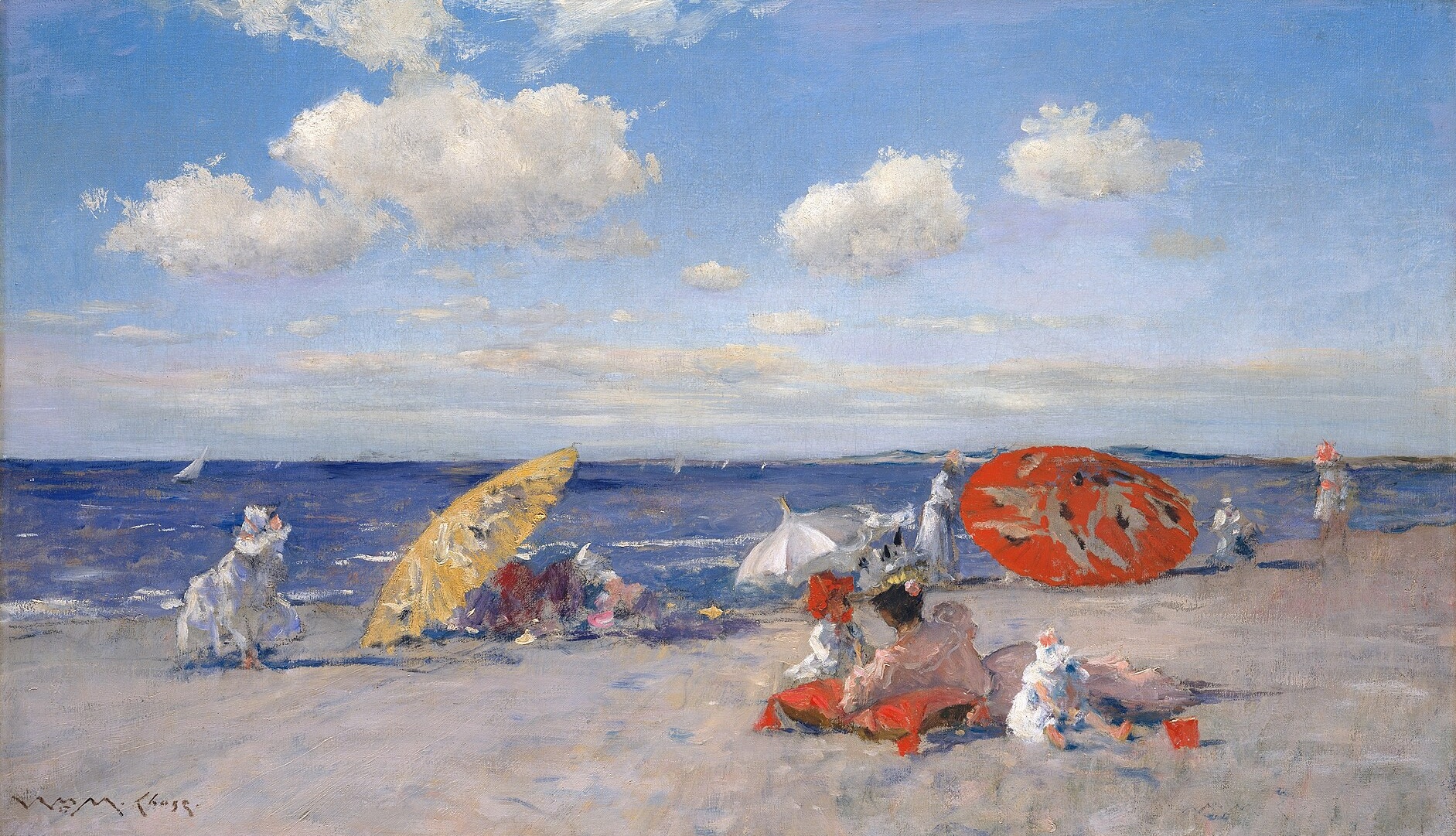
When New York finally showed up to the Supreme Court, Oswald was working for France as a spy. And he was on a mission in Ireland. I’m serious.7 France was in the midst of its revolution, and Oswald was sympathetic to the cause.8 So he joined up with them, and as a result, he was M.I.A. once New York finally responded to his lawsuit.
As far as the Court was concerned, Oswald was on vacation.

While Oswald was out karate chopping leprechauns, his fortunes in the States became much sunnier. The delay in Oswald’s case turned out to be awesome for him.
Remember New York’s Anti-Federalist Governor George Clinton? The guy with the shaggy eyebrows who made it his mission to resist the Supreme Court?
His political power was fading. Although Clinton beat out Federalist John Jay in an election for New York governor (yes, that John Jay, the Chief Justice. He was looking to bail from the Supreme Court because riding circuit was brutal, and he had a kid on the way),9 New York’s legislature flipped from Anti-Federalist to Federalist in 1793.10 The Federalists were the ones who supported the federal government, and they were seriously opposed to Clinton.
The New York Federalists wanted to punish Clinton, and they did. Badly.
Clinton wanted to “pass a resolution condemning the Chisholm decision,” but the Federalists did the opposite.11 They ordered New York’s Attorney General Nathaniel Lawrence to defend New York in the Supreme Court.12
Sending their A.G. to the Supreme Court to defend New York in the Oswald case was the Federalists’ way of showing they respected the federal government and recognized its legitimacy.
That’ll show Clinton.
To Settle Or Not To Settle…
So New York had two lawyers on the case. And each lawyer wanted to take a different approach in the Oswald matter.
Ingersoll was convinced New York was in a bad spot. He believed if the case proceeded, New York would lose.13 So he recommended a settlement.14
Lawrence, on the other hand, felt he had a duty to fight on. Remember, New York’s legislature ordered the A.G. to defend the case.15 Lawrence interpreted his instructions to mean take the case to trial.16 Settling the case, in his view, wasn’t defending it. He believed he had to see it through, even if New York’s prospects were bleak.17
What’s Your Move?
Lawrence, being New York’s A.G. and the captain of the ship, got his way. New York would defend the case.
So the case went to trial in 1795. (We’re skipping ahead a bit in time so we can wrap up the Oswald saga!)
Diamonds or Coal?
A bit of background before we look at the result.
Here at Lex Sans Latin, we are only studying reported cases, with a few exceptions.
A reported case is one that has been published in an official law report. (The law reports we use are the U.S. Reports, which report the Supreme Court’s decisions.)
If a case isn’t reported, it’s considered an unreported case. This means the case happened, but wasn’t written down in an official law report.
The distinction isn’t just academic. Importantly, if a case is “reported,” it can have the force of precedent. Precedent consists of prior rulings which guide a court’s decision when it is faced with similar cases. Judges look to precedent rather than just going with their gut each time a new matter comes before them. The idea is, looking to precedent is more fair and more efficient.
A reported case can be binding on the courts, meaning a reported case can potentially force courts to rule a certain way when they are faced with similar cases where the precedent applies.
If reported cases are diamonds, unreported cases are lumps of coal.
Unreported cases can’t be binding. At best, they can be persuasive, meaning the courts are allowed to consider them when making decisions, but unreported cases can’t force a court to rule a certain way, like how a reported decision sometimes can.
To give you an idea of how much more valuable a reported case is versus an unreported case, some courts don’t even allow attorneys to cite to unreported cases in their briefs.
What we’re calling Oswald v. New York IV, unlike the rest of the cases we’ve written about so far, is an unreported case. (Reporter of Decisions Alexander Dallas put down his pen after Oswald III, apparently.)
Usually, we aren’t going to spill any ink on unreported cases. We’re sticking with the official Supreme Court canon here. But we’re writing about Oswald IV because Oswald’s case started out being reported, and we want to finish the story.
Now, let’s turn to the trial.
Oswald Gets His Day in Court
In February of 1795, the Supreme Court had a jury trial.17 That’s crazy. A jury trial in the Supreme Court? That doesn’t happen anymore. Indeed, the Supreme Court has only presided over three jury trials in its entire history, as far as we can tell.18
The first and only reported jury trial occurred in the case of Georgia v. Brailsford in 1794.19 We’ll discuss that case very soon.
Oswald was the second one.
The third and final jury trial occurred in 1797, in an unreported case called Cutting v. South Carolina.20
So, Oswald’s case is one of three in history where the the Supreme Court presided over a jury trial.
The Verdict
As Ingersoll feared, Oswald won. We don’t have comprehensive records of the trial — like I said, the case was unreported — but we do know the jury ruled in favor of Oswald for a little over $5,300.22 Oswald won the money on behalf of his father-in-law John Holt’s estate. At last, John Holt was compensated for his work as New York’s printer, after he wasn’t paid adequately during his lifetime.
Two days after the jury ruled in favor of Oswald, the Eleventh Amendment was ratified. This was the amendment that said private citizens couldn’t sue States in federal court.23 Looks like Oswald eeked out a win just in time.
After New York lost at trial, it settled the case with John Holt’s estate.24 The State paid the estate on New Year’s Eve, 1795.25
(Funny. Even in 1795 parties rushed settlement payments out before the close of Q4…)
Although Oswald died in September of 1795, a couple of months before he could see the money hit his father-in-law’s bank account, he passed knowing he succeeded in vindicating his father-in-law’s claim to fair pay.26
John Holt’s labor, it seems, was not in vain.
Final Reflections
Oswald v. New York, I think, provides an interesting glimpse into an alternate universe — what if Chisholm held and the Eleventh Amendment was never ratified? Presumably, there would be a lot more cases like this, cases where citizens punish States for screwing them over.
But, as it so happens, this is the only time a citizen sued a State in the Supreme Court, had a jury trial, and won.27
What’s most remarkable to me about Oswald’s story is each delay in his case only seemed to solidify his legal standing. Because New York stalled appearance before the Court, the Court decided Chisholm before it adjudicated Oswald. New York had to show up because of Chisholm.
Then, as a result of Oswald’s spy mission in Ireland, the case was delayed further, which allowed time for the political climate in New York to sour on Clinton and for a new guard of Federalists to get into the legislature. This new guard wanted to defend the case despite its difficulties. All of this worked out very well for Oswald.
I say, good for him.
Moral of the story? Take that vacation. I’m sure everything will be just fine.
If you followed the story of Oswald v. New York, take a moment to pat yourself on the back. You’ve read about a complicated case dealing with a bunch of different areas of law: employment law, contract law, constitutional law, and estate law, at least. There’s a feather in your cap!
Have more to say? Leave a comment!
Studying this case for class? I offer 1-on-1, virtual law school tutoring. Learn more here.
Here’s a Bluebook cite for ya – Johnathan J. Azar, When Taking a “Vacation” Turns Out to Be the Best Legal Strategy: Oswald v. New York IV (1793) (Apr. 15, 2026)
FOOTNOTES
- Shortell, Christopher, Rights, Remedies, and the Impact of State Sovereign Immunity 36 (State Univ. of N.Y. Press 2008). ↩︎
- Id. ↩︎
- Id. ↩︎
- Id. ↩︎
- Oswald Family Papers (McA MSS 009), McAllister Collection, The Library Company of Philadelphia ↩︎
- Maeva Marcus ed., The Documentary History of the Supreme Court of the United States, 1789–1800 vol. 5, at 58 n.9. (Columbia University Press 1994); ↩︎
- Id. ↩︎
- Id. ↩︎
- The Disputed Election of 1792 Editorial Note, Founders Online, Nat’l Archives, https://founders.archives.gov/documents/Jay/01-05-02-0191. ↩︎
- Id. ↩︎
- Shortell, supra, 36. ↩︎
- Id. ↩︎
- Id. ↩︎
- Id. ↩︎
- Id. ↩︎
- Id. at 36-37 ↩︎
- Id. ↩︎
- Id. at 37 ↩︎
- Lochlan F. Shelfer, Special Juries in the Supreme Court, 123 Yale L.J. 232 (2013) ↩︎
- Id. at Abstract ↩︎
- Id. at 232 ↩︎
- Shortell, supra, 37. ↩︎
- U.S. Const. amend. XI. ↩︎
- Id. ↩︎
- Id. ↩︎
- Eleazer Oswald, Find a Grave, https://www.findagrave.com/memorial/13323714/eleazer-oswald (last visited Apr. 14, 2026). ↩︎
- Shelfer, supra, 232 ↩︎

Disclaimer: All content on Lex Sans Latin is provided for educational and informational purposes only, and does not constitute legal advice. Nothing on this site creates an attorney–client relationship. If you need legal advice, please consult an attorney.
This blog may include quotations or excerpts from judicial opinions, statutes, scholarly articles, books, and other primary or secondary sources. Such materials are used for purposes of commentary, criticism, teaching, scholarship, and research in accordance with the fair use doctrine under U.S. copyright law (17 U.S.C. § 107). All cited materials are attributed to their original sources to the extent reasonably possible.
Any tutoring or instructional services offered are educational in nature and are not a substitute for legal advice or legal representation.


Leave a Reply