
Socrates supposedly said, “The unexamined life is not worth living.”
Taking a note from the man whose very name haunts law students, I think it’s a good idea to reflect on the most interesting trends emerging from the Supreme Court from year to year.
Read until the end to unlock our playlist, which consists of one song carefully selected for each Supreme Court case. That’s right, we’ll have a fresh playlist featured in each of our wrap-up posts.
I couldn’t get through law school without having volumes upon volumes of music to listen to while studying, so I hope you’ll find some use and enjoyment from our selections while you learn.
Follow our Spotify account here, this way you can find and listen to our case-inspired playlists anytime.
One last note before we dive in. I lumped the Court’s first two years into one post because the Court only heard two cases in 1791. When the Court has a light caseload, we’ll combine years. Soon enough, though, wrap-up posts will look at one year at a time.
Without further ado, here are five key takeaways from the Court’s first cases.
1. 6/6 cases occurred as a result of the Revolutionary War.
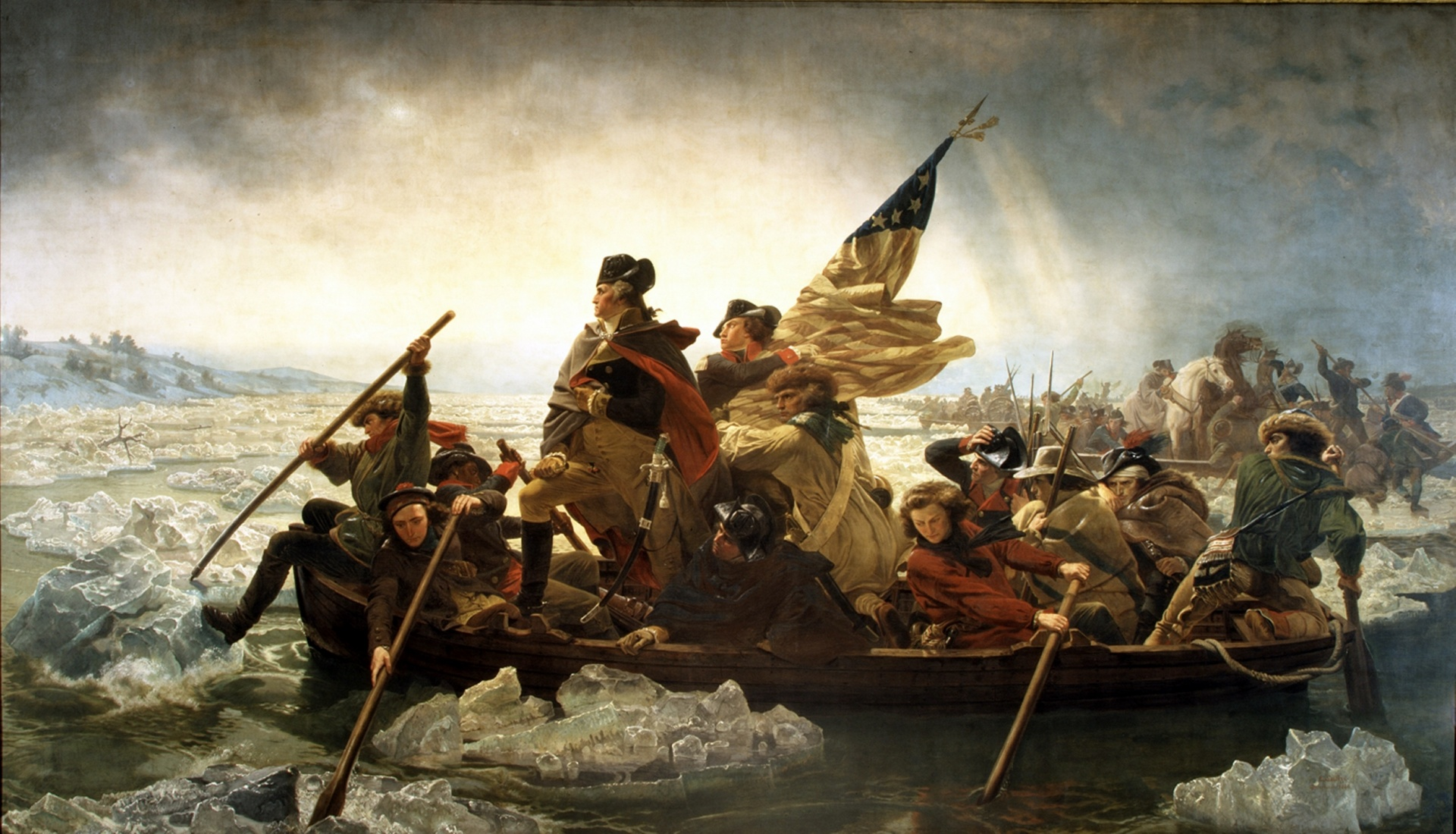
After the fighting stopped in 1783, the United States found itself pressed financially. Livelihoods were ruined. And there were wounded veterans who needed tending to. The Court’s early docket reflects these troubles.
General West of West v. Barnes found himself struggling to pay off the mortgage on his farm because his paper money was hardly worth anything, because the government was printing so much cash to fund the war effort.
In Van Staphorst v. Maryland, the State of Maryland went to the Dutch for a war loan, and fought bitterly over its terms after the war wound down.
The printer John Holt only got a job with the State of New York because the British confiscated his printing equipment, which led to the payment dispute at the center of Oswald v. New York I and II. And Oswald, the petitioner himself, was a veteran who fought alongside President Washington.
The State of Georgia’s wartime debt law resulted in the fight for blood money in Georgia v. Brailsford I.
And Hayburn’s Case involved a law intended to provide relief for disabled Revolutionary War vets.
When you fight a war, be ready for a mess.

2. Conflicts of interest everywhere! 6/6 cases involved the Justices themselves before the cases ever made it to the Supreme Court!
Here’s our (conservative) conflict count. There are probably more.
Chief Justice Jay: 4 conflicts
- Ruled against General West in Rhode Island Circuit Court, and then heard General West’s petition in the Supreme Court. (West v. Barnes)
- Was an arbitrator in the pre-litigation dispute between the Dutch Brothers and the State of Maryland. (Van Staphorst v. Maryland)
- Was Maryland’s agent Matthew Ridley’s brother-in-law! (Van Staphorst v. Maryland)
- Set John Holt’s salary, the very salary which is at the center of the dispute before the Court. (Oswald v. New York I and II)
Justice Wilson: 2 conflicts
- Spoke to A.G. Edmund Randolph about the case before the case ever made it to the Supreme Court. (Hayburn’s Case)
- Was on the other side of Randolph’s writ of mandamus in the Supreme Court…and yet he ruled on the very writ which sought to compel him to obey the Invalid Pensions Act. (Hayburn’s Case) (this conflict potentially applies to all of the Justices who ruled in the case, as all of them would have been affected by the ruling one way or another.)
Justice Cushing: 1 conflict
- Ruled against General West in Rhode Island Circuit Court, and then heard General West’s petition in the Supreme Court. (West v. Barnes)
Justice Iredell: 1 conflict
- Ruled on Georgia’s request to join the case in Georgia’s Circuit Court, and then heard Georgia’s petition in the Supreme Court. (Georgia v. Brailsford I)
Justice Blair: 1 conflict
- Was on the other side of Edmund Randolph’s writ of mandamus in the Supreme Court…and yet he ruled on the very writ which sought to compel him to obey the Invalid Pensions Act. (Hayburn’s Case)
That’s at least 9 conflicts across 6 cases. Woof.
I understand that back then, the Justices were required to ride circuit and hear cases at lower federal courts, so the conflict was baked into the system.
But by modern standards, a judge ruling on a case he already heard in a lower court is a conflict, and enough to disqualify a judge from hearing a case.
How would you feel if you appealed a court’s decision and one of the judges deciding if your judge got it wrong was the same judge? This practice was initially the norm in the nation’s federal courts. Wild.
Bonus Conflict:
Reporter of Decisions Alexander Dallas: 1 conflict
- Georgia’s lawyer in Georgia v. Brailsford I wrote the official record of the Justice’s opinions in the entry for his own case.
3. The Reporter of Decisions did a poor job keeping records.
Speaking of Dallas, who was the U.S.’s first Reporter of Decisions,1the guy didn’t do the best job keeping records.
U.S. Supreme Court decisions are recorded in volumes called the U.S. Reports. Or, at least, they’re supposed to be. When Dallas was Reporter of Decisions, his records were incomplete.
The official records we have for West v. Barnes don’t include the Justices’ opinions. We had to dig into the newspaper records for those.
The opinions in Georgia v. Brailsford I alternate between majority and dissenting opinions. (He gives me headaches. Headaches!)
And there are no opinions reported in Hayburn’s Case even though there was a lot of argument leading up to the Justices’ 3-3 split.
It probably wasn’t all Dallas’ fault. The Justices at the time weren’t required to write down their decisions, so Dallas was often left to scramble for “spectators’ notes…notes used by the justices in announcing decisions, and…the briefs of counsel” to cobble together his records.2 And he wasn’t paid for his work!3
Poor guy. I feel slightly guilty now. Slightly.
Apparently Dallas couldn’t catch a break even when he was alive. Back in his day, people called him out for his shoddy work to the point where he wrote a friend, “I have found such miserable encouragement for my Reports, that I have determined to call them all in, and devote them to the rats in the State-House.”4
I suppose Dallas did the best he could with what he had. And his records are the guide for the beginning of our Con Law, Chronologically series. A tentative thank you to him, then.
4. 5/6 cases involved creditors and debtors
Farm debt (West v. Barnes), slave debt (Georgia v. Brailsford I), tobacco debt (Van Staphorst v. Maryland), and an unpaid salary (Oswald v. New York I and II).
Each of the Court’s earliest cases, except for Hayburn’s Case, dealt with debt. Makes sense. The American Revolution left governments and citizens alike stretched thin.
5. The biggest constitutional issue facing the Court was whether States can be sued in federal court.
Although the stated dispute in most of these cases concerns the payment of debt, there is a giant question looming beneath the surface in some of the Court’s earliest cases. That’s the issue of sovereign immunity in the context of the federal courts.
Is a person actually allowed to sue a State in federal court, including in the Supreme Court?
In other words, do We the People have the right to challenge a State in the nation’s highest court?
The Court in Van Staphorst v. Maryland avoided the issue because the State of Maryland didn’t put up a fight. Maryland showed up in court to respond to the Van Staphorsts. By its own consent, the State of Maryland took the sovereign immunity issue off of the table.
However, the Court did press the issue in Oswald v. New York I and II by demanding New York show up to court.
Unlike some constitutional questions, which get kicked around for decades on end without resolution, we will get an answer as to sovereign immunity soon. The result, I think, is stunning.
Our Playlist
Check out our case-inspired playlist below and follow us on Spotify.
West v. Barnes – Far Away by Junip. If the Supreme Court wasn’t so far away from General West, he may have had a better outcome. “It’s all far so far away. It’s all far so far away.”
Van Staphorst v. Maryland – Cigarette by Joji. Yeah, cigarettes weren’t invented yet, but this case is about tobacco.
Oswald v. New York I and II – God’s Gonna Cut You Down by Johnny Cash. “… You can run on for a long time / Run on for a long time / Run on for a long time / Sooner or later God’ll cut you down.” A party can’t avoid showing up to court forever…
Georgia v. Brailsford I – The Devil Went Down to Georgia by The Charlie Daniels Band. Brailsford went down to Georgia to collect his blood money.
Hayburn’s Case – Ipa by Jinsang. The law at issue here was the Invalid Pensions Act, or the “IPA.” (I don’t know if I could’ve survived law school without Jinsang and the panoply of lo-fi greats.)
Disclaimer: This playlist is provided for entertainment and informational purposes only. Lex Sans Latin is not affiliated with, sponsored by, or an official partner of Spotify or any artists featured in this playlist.
The inclusion of any songs or artists does not imply endorsement by Lex Sans Latin of the lyrics, themes, messages, or viewpoints expressed therein. All opinions, language, and creative content within the music remain solely those of the respective artists and creators.
Listeners engage with this playlist at their own discretion.
Leave us a comment to share something you’ve found interesting about the Supreme Court’s cases from 1791–1792!
FOOTNOTES

Disclaimer: All content on Lex Sans Latin is provided for educational and informational purposes only, and does not constitute legal advice. Nothing on this site creates an attorney–client relationship. If you need legal advice, please consult an attorney.
This blog may include quotations or excerpts from judicial opinions, statutes, scholarly articles, books, and other primary or secondary sources. Such materials are used for purposes of commentary, criticism, teaching, scholarship, and research in accordance with the fair use doctrine under U.S. copyright law (17 U.S.C. § 107). All cited materials are attributed to their original sources to the extent reasonably possible.
Any tutoring or instructional services offered are educational in nature and are not a substitute for legal advice or legal representation.


Leave a Reply