
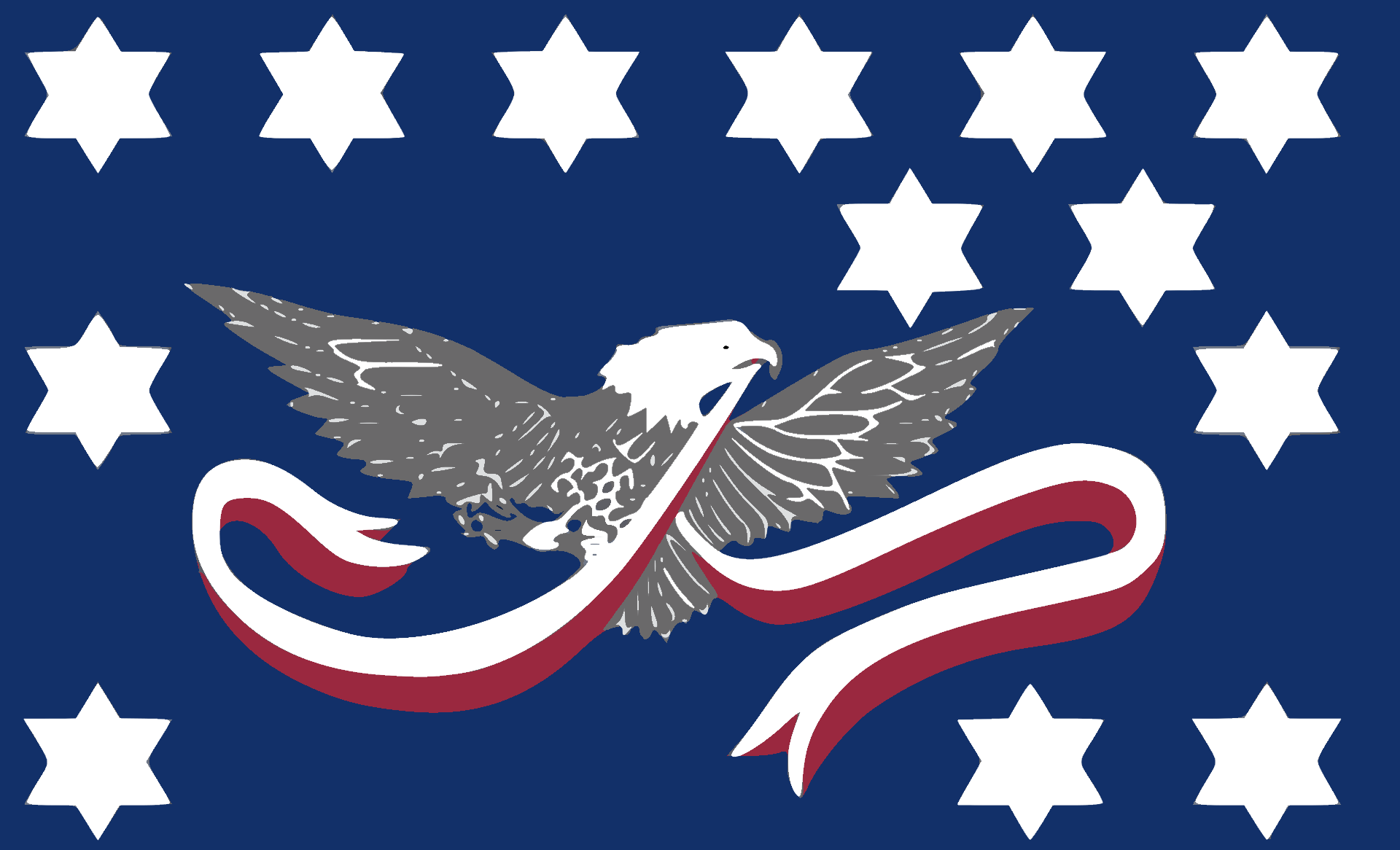
The Supreme Court’s very first criminal law case comes out of Pennsylvania.
Petitioner: The United States of America. This is the first reported Supreme Court case where the federal government itself is a party.
(When we see “the United States” in the name of a case, that just means that the federal government is a party to the case.)
Respondent: Daniel Hamilton, an insurrectionist charged with high treason after he and his gang of fellow farmers took up arms against the government for taxing their whiskey.
This case went to the Jay Court during the Washington Presidency. The Court ultimately ruled in favor of Hamilton, granting him release on bail.
See the Court’s opinion here.
It’s like this.
I don’t know if you’ve heard, but Americans aren’t exactly known for embracing new taxes. So when the Whiskey Tax was signed into law in 1791, American farmers lost their minds.1
To be clear, this wasn’t some little sales tax dinging your uncle for buying a handle of vodka at ShopRite. Rather, the Whiskey Tax was imposed on farmers who made liquor.2 For any American farmer brewing liquid courage in a barrel, the tax on just one gallon of alcohol could be as much as the equivalent of one day’s wages.3
The Whiskey Tax came to be thanks to Secretary of the Treasury Alexander Hamilton, who proposed imposing a “sin tax” on American liquor to help repay the United States’ debt.4 A sin tax is a tax imposed on certain, vice-related goods to discourage their use or consumption. Think taxing alcohol, cigarettes, and gambling.
While the tax itself was harsh, dodging the tax could get a defiant farmer in even more hot water. (Add some whiskey and call it a Hot Toddy, if you will.)
If a farmer failed to pay the tax, the feds could take his liquor and the boats he used to transport it (and his horses, if the horses were carrying the alcohol).5
The Whiskey Tax also forced farmers to keep meticulous records on their spirit production, which was especially problematic considering many farmers were illiterate.6
And if you failed to comply with the Whiskey Tax, you’d have to go to trial.7 That sounds like a charitable grant of civil liberty, except you’d have to go to trial in Philadelphia, home of the Supreme Court.8 That could be a major hike, especially for those living in Western Pennsylvania, where the pain caused by the Whiskey Tax was especially acute.9
What a mess!
Two more reasons why the tax sucked for farmers.
At the time, farmers would often make their grain into whiskey because whiskey was much easier to transport.10
Grain is heavy. It takes up a lot of space. But if you mush it down and do alchemy to make the stuff into whiskey, it’s way easier to haul east to sell to yankees.11 So the Whiskey Tax appeared to punish farmers for trying to make a living.12
Finally, whiskey wasn’t only an indulgence. For some poor farmers, whiskey was a way of life, and not in the fraternity sense. I mean whiskey was literally currency that “the poorest people of western Pennsylvania…barter[ed].”13
This is why historians Cynthia and Stephanie Krom argue the Whiskey Tax could be considered the United States’ first income tax.14
Enter Our Petitioner, Daniel Hamilton
While some Pennsylvanian farmers protested the Whiskey Tax peacefully, others did not.15 Some aggrieved farmers tarred and feathered tax collectors.16 In a dramatic scene evocative of Django Unchained, a group of at least 600 doused one wealthy tax collector’s house in whiskey and lit it on fire.17 Make no mistake: these farmers were insurrectionists raging against the establishment.
One of those insurrectionists was Daniel Hamilton.

For his part, Daniel Hamilton was a leader of a gang of rebels.19 Perhaps his greatest documented sin was his participation in the sadistic attack of a man named Robert Wilson.20
Historians believe Robert Wilson suffered from some intellectual disability, making his brutal treatment all the more disturbing.21
Wilson portrayed himself as a spy for the federal government. To be clear, he wasn’t.22 He just…acted like he was.23 That was no way to ingratiate himself to the West Pennsylvanians.24
As a result, in October of 1791, apparently believing Wilson was a fed, Hamilton’s gang painted their faces black, pulled Wilson out of his bed, marched him five miles, stripped him naked, and burned him with a blacksmith’s iron.25 Then they tarred and feathered him.26
Sick stuff.
George Washington eventually put an end to the chaos in Pennsylvania by personally leading an army of almost 13,000 against the rebels, ending the Whiskey Rebellion.27
The Charge: Treason
In 1795, Daniel Hamilton was charged with high treason for engaging in an armed insurrection against the United States.28 A charge in a criminal case is an official allegation that someone committed a crime.
One commits treason when one tries to overthrow his own government.29 Treason is a serious crime. It’s punishable by death.30
The Ask: Habeas Corpus
Following his arrest, Hamilton filed a petition for habeas corpus to the Supreme Court.31
A petition for habeas corpus is a request asking a court to evaluate whether a prisoner is being lawfully detained by the government.32 In other words, if a prisoner thinks he is being wrongly held in jail, he can request a writ of habeas corpus.
If the court grants the petition, the prisoner will be brought to court and the government will have to show that it is justified in holding the prisoner.33
What does habeas corpus mean, anyway? Well, it translates from the Latin to, “You have the body.”34 The implication of the phrase is, “You have the body, (so bring him in).”
The idea is, the government is the keeper of the body of the prisoner, so if the writ is granted, the government is obligated to bring the prisoner before the court.
Well, the Supreme Court granted Hamilton’s petition. As a result, the disgraced insurrectionist was marched into the United States Supreme Court to have his fate decided.35
The Issue
When we’re dealing with a writ of habeas corpus, the question isn’t, “Is this person guilty?” That’s a question for the prisoner’s trial.
Rather, the question is, “Can the government still keep this person in jail while he awaits his trial?”
So Hamilton went before the Court to ask to be let out on bail. When a prisoner is let out on bail, this doesn’t mean he escapes trial or is found not guilty. It just means he’s allowed to live his life outside of a jail cell while he awaits his trial.
A prisoner can potentially be let out of jail on bail if the court is convinced he will attend his pending criminal proceedings after he’s let go.36
The specific question before the Court was: should the Court grant Hamilton bail?
The Arguments
Hamilton argued:
- I haven’t been given a fair process. There’s no basis for the allegations against me.37 I don’t have any of the names of the witnesses who have supposedly testified against me, and I haven’t seen any witness testimony.38 Heck, I haven’t even had a hearing in front of the judge!39 This is all procedurally wrong. So please let me out of jail.40 I’ll even pay bail if I have to.41
The United States responded:
- The courts are backed up. Yeah, the prisoner hasn’t had a hearing yet, but that’s because we’ve been busy. There were a lot of insurrectionists.42
- The lower court already said Hamilton can’t get out on bail, and the Supreme Court can’t just change the lower court’s decision on this on a whim. Under the law, the district judge has the authority to decide whether a prisoner stays in jail or gets out on bail.43 If the Court wants to change the district judge’s ruling, there either needs to be a new case or an accusation of misconduct.44 We don’t have either, so there’s no way for the Court to change the decision to deny Hamilton bail.45
- (If you’re going to let this guy out, he should have to pay bail so we know he’ll show up in court.)46
Hamilton responded:
- I wasn’t a troublemaker. Yeah, I had beer with some rebels, but I was actually the reasonable one in the group.47 I told them we shouldn’t break any laws.48 Look here, I have statements from witnesses saying I was a good noodle.49
The Decision
Justice Wilson wrote the unanimous opinion of the Court.
Justice Wilson
Justice Wilson declared Hamilton could make bail, so long as he paid $8,000.50 Wilson pulls a John Jay and provides no stated rationale for the Court’s decision.51
Perhaps the injustice of being held in jail without a hearing persuaded the Court to give Hamilton a shot at bail, for a high price.
A Plot Twist…
What became of Daniel Hamilton?
Well, just two years after Daniel Hamilton was charged with treason, President Washington pardoned him and nine other insurrectionists, all on his very last day of office.52 Washington explained, “[I]t is ever my desire to temper the administration of justice with a reasonable extension of mercy in cases which appear to require it.”53
History doesn’t repeat itself, but it sure does rhyme, doesn’t it?
Final Reflections
Should Daniel Hamilton have gotten bail? I don’t know. The historical record isn’t conclusive as to what degree he himself “held the knife,” so to speak. Did he physically lay his hands on Robert Wilson? Did he himself light the tax collector’s house on fire? Or was he simply part of the mob?
For me, it makes a difference. Was this actually a violent menace, or was he one of many rabble rousers who kind of just stood around?
He is listed as one of ten “ringleaders” in Washington’s pardon, and his name is first on the list, so I imagine he was probably quite involved in the rebellious activities.
If Daniel Hamilton was truly the cruel man who tormented Robert Wilson, I think I’d want to keep him in jail without bail. At the same time, he’s got to have his due process. So, he should have been given a hearing expeditiously and been provided access to the evidence against him so he could put up a defense. I think that’s where I land.
I confess my exposure to bail doctrine is limited. I look forward to learning more along with you through later court cases.
One thing I am certain of, though, is my strong dislike for Alexander Hamilton has doubled after reading about the Whiskey Tax. The tax was so extreme that “some Hamilton critics have suggested…he intended to provoke opposition, giving the Federal Government a chance to show its strength.”54 Sounds about right!
Even one of Hamilton’s biographers, Ron Chernow, writes, “Hamilton confessed to Washington an ulterior political motive for this liquor tax: he wanted to lay ‘hold of so valuable a resource of revenue before it was generally preoccupied by the state governments.’ … [H]e wanted to starve the states of revenue and shore up the federal government.”55
Through the debacle of the Whiskey Tax, we can clearly see that Alexander Hamilton was a politician at heart, above all else. That’s not a compliment in any sense.
You Be The Judge
What do you think of this case? Leave a comment!
Studying this case for class? I offer 1-on-1, virtual law school tutoring. Learn more here.
Here’s a Bluebook cite for ya – Johnathan J. Azar, When a President Pardons an Insurrectionist: United States v. Hamilton (1795) (May 22, 2026)
FOOTNOTES
- Cynthia L. Krom & Stephanie Krom, The Whiskey Tax of 1791 and the Consequent Insurrection: “A Wicked and Happy Tumult”, 40 Acct. Historians J. 91, 106 (2013). ↩︎
- Id. at 98 ↩︎
- Id. at 97 ↩︎
- Id. at 95 ↩︎
- Id. at 98 ↩︎
- Id. at 99 ↩︎
- Id. at 102 ↩︎
- Id. ↩︎
- Id. ↩︎
- Id. at 97 ↩︎
- Id. ↩︎
- Id. ↩︎
- Id. at 100-101 ↩︎
- Id. at 101 ↩︎
- Id. at 106 ↩︎
- Id. at 106-107 ↩︎
- Id. at 108 ↩︎
- Richard R. Gideon, The Whiskey Flags: An Intoxicating Look into a Sobering Subject (N. Am. Vexillological Ass’n 2001), https://www.oldsaintlukes.org/wp-content/uploads/2014/03/Whiskey-Flags1.pdf ↩︎
- Krom & Krom, supra note 1, at 107 ↩︎
- Id. ↩︎
- Id. ↩︎
- Id. ↩︎
- Id. ↩︎
- Id. ↩︎
- Id. ↩︎
- Id. ↩︎
- Id. at 109 ↩︎
- Indictment of Daniel Hamilton (May 4, 1795), in United States v. Daniel Hamilton, Criminal Case Files, 1791–1883, Records of District Courts of the United States, Record Group 21, National Archives at Philadelphia (Philadelphia, Pa.), available at DocsTeach National Archives ↩︎
- Treason, The Law Dictionary featuring Black’s Law Dictionary Free Online Legal Dictionary 2d ed. (last visited May 22, 2026). ↩︎
- Francis Paschal, The Constitution and Habeas Corpus, 1970 Duke L.J. 605, 625 (1970). ↩︎
- United States v. Hamilton, 3 U.S. (3 Dall.) 17, 17 (1795). ↩︎
- Federal Judicial Ctr., Jurisdiction: Habeas Corpus, https://www.fjc.gov/history/work-courts/jurisdiction-habeas-corpus ↩︎
- Id. ↩︎
- Habeas Corpus, U.S. Courts, https://www.uscourts.gov/glossary-legal-terms/habeas-corpus (last visited May 22, 2026). ↩︎
- United States v. Hamilton, 3 U.S. (3 Dall.) 17, 17 (1795). ↩︎
- Charles Doyle, Congressional Research Service, Bail: An Abridged Overview of Federal Criminal Law, R40222 (2024), https://www.congress.gov/crs-product/R40222 ↩︎
- United States v. Hamilton, 3 U.S. (3 Dall.) 17, 17 (1795). ↩︎
- Id. ↩︎
- Id. ↩︎
- Id. ↩︎
- Id. ↩︎
- Id. ↩︎
- Id. ↩︎
- Id. ↩︎
- Id. ↩︎
- Id. ↩︎
- Id. at 18 ↩︎
- Id. ↩︎
- Id. ↩︎
- Id. ↩︎
- Id. ↩︎
- George Washington, Presidential Pardon of the Ringleaders of the Whiskey Rebellion (Mar. 3, 1797), Gilder Lehrman Institute of American History. ↩︎
- Id. ↩︎
- Steve Simon, Alexander Hamilton and the Whiskey Tax, Alcohol & Tobacco Tax & Trade Bureau, https://www.ttb.gov/public-information/special-feature (last visited May 22, 2026). ↩︎
- Id.; Ron Chernow, Alexander Hamilton 342 (Penguin Press 2004). ↩︎

Disclaimer: All content on Lex Sans Latin is provided for educational and informational purposes only, and does not constitute legal advice. Nothing on this site creates an attorney–client relationship. If you need legal advice, please consult an attorney.
This blog may include quotations or excerpts from judicial opinions, statutes, scholarly articles, books, and other primary or secondary sources. Such materials are used for purposes of commentary, criticism, teaching, scholarship, and research in accordance with the fair use doctrine under U.S. copyright law (17 U.S.C. § 107). All cited materials are attributed to their original sources to the extent reasonably possible.
Any tutoring or instructional services offered are educational in nature and are not a substitute for legal advice or legal representation.



Leave a Reply